Wood Veneer Grades: AA, A, B, C and How to Read Them
AA, Face A, B & Better, A-1, BM: veneer specs use precise vocabulary. Understanding it lets you pay for the quality you need, no more and no less.
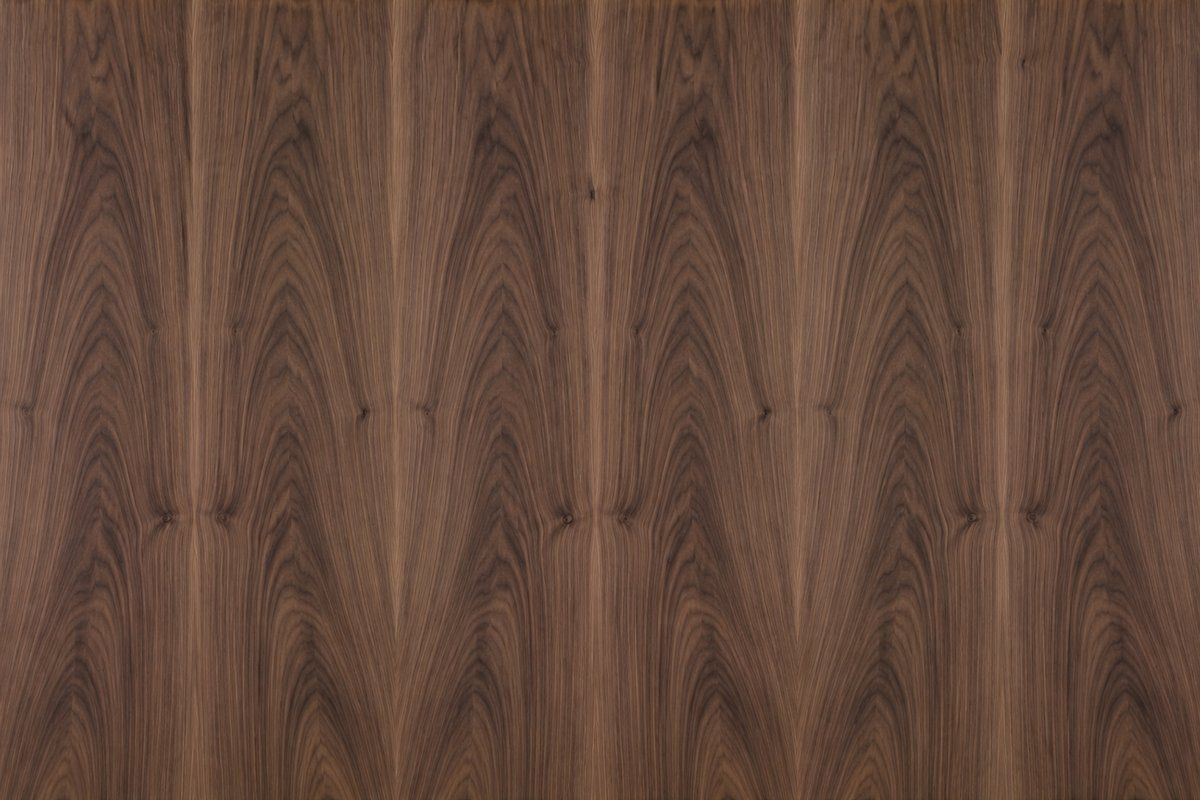
01 — What is a grade?
A grade expresses the visual quality of a veneer sheet: consistency of colour and grain, presence of knots, splits or repairs, and the usable width of the assembled leaves. Names vary from one manufacturer to another, but the logic is always the same: the higher the grade, the stricter the appearance requirements, and the higher the price.
02 — Common grades
| Grade | Appearance | Defects allowed | Typical use |
|---|---|---|---|
| AA / Extra | Very uniform, highly decorative | No visible defects | High-end furniture, fine cabinetry, prestige panels |
| A | Good overall look, even grain | Slight colour variation, small discreet defects | Cabinets, interior millwork, exposed panels |
| B | Acceptable look, moderate visible defects | Sound knots, marked variation, local repairs | Back faces, everyday furniture, less exposed parts |
| C / utility | Non-decorative | Open defects, discolouration, visible repairs | Inner plies, hidden areas |
03 — Panel grades: A-A, A-1, A-4
For a veneered panel, the grade combines the face (letter) and the back (letter or number).
| Grade | Face | Back | Use |
|---|---|---|---|
| A-A | Grade A | Grade A, equivalent | Both sides visible: doors, open shelving, partitions |
| A-1 | Grade A | Grade 1, clean | Cabinet boxes, one main face |
| A-4 | Grade A | Grade 4, utility | Applied or built-in panels, back never seen |
04 — Reading our flexible sheet specs
Our 4 × 8 ft sheets come in two families, and each description states the face grade and the matching.
Standard
A and AA facesVisible surfaces where appearance matters: fronts, doors, furniture.
Commercial
B & Better, #2 White & Better, Face 1Budget-conscious projects, cabinet interiors, secondary parts or pieces that will be stained.
| Abbreviation | Meaning |
|---|---|
| BM | Book match: consecutive leaves opened like a book, mirror effect |
| SM | Slip match: leaves slid side by side, repeating pattern |
| PM | Pleasing match: leaves assembled for a harmonious whole, without strict symmetry |
| WP | Whole piece: one-piece face, typical of rotary cut |
| Uniform White | Birch or maple selected from pale sapwood, no dark heartwood |
| Calico | Hickory with strong contrast between pale sapwood and dark heartwood, prized for its character |
Rule of thumb: keep the high grades for surfaces people see, and save on backs and hidden parts. For matching types in detail, see Cutting & Matching.